
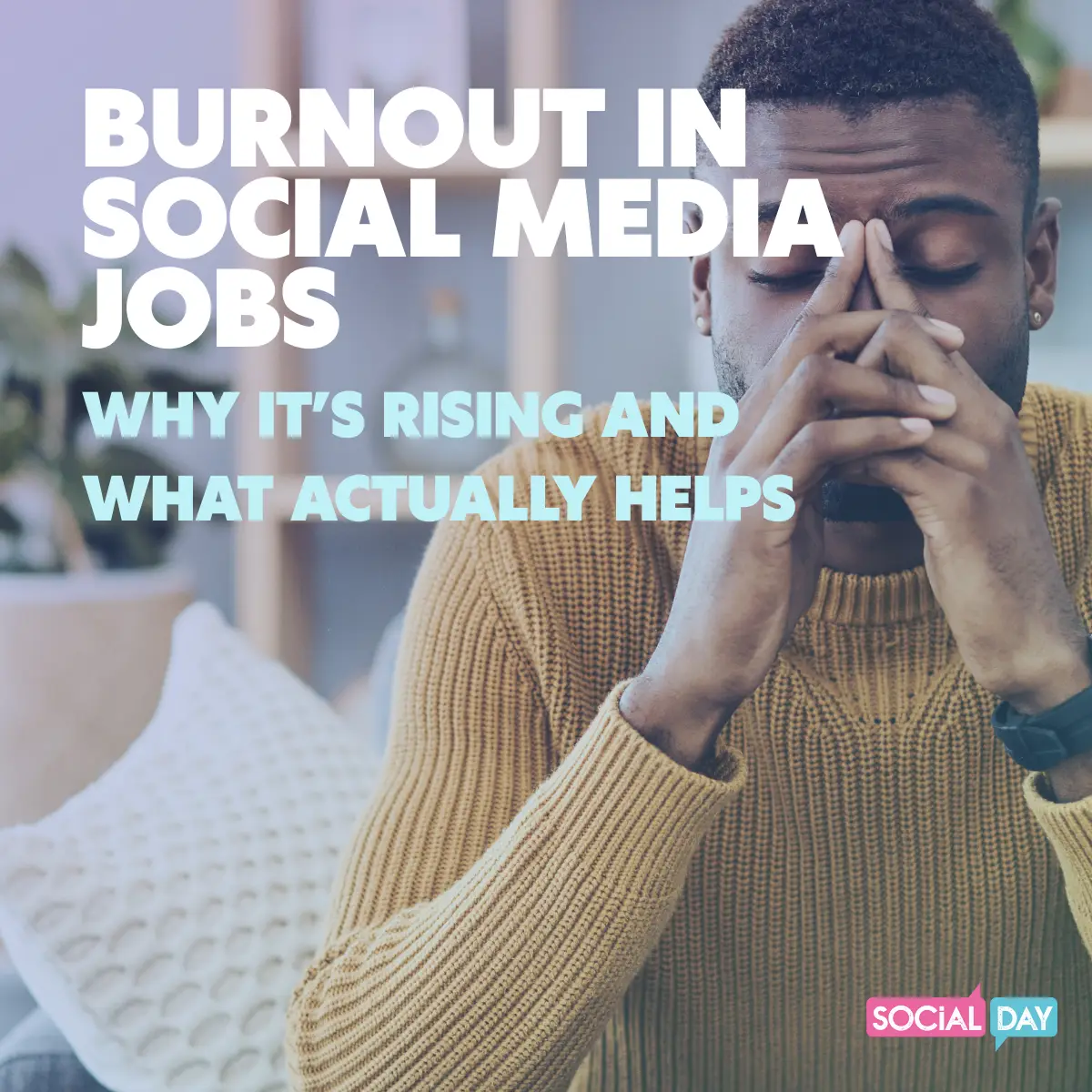
Burnout in social media is not a mindset problem. It is a work design problem.
If you work in social media, burnout often arrives quietly. You still show up. You still post. You still respond. You still report. But everything feels heavier than it used to. Your creativity slows down. Your patience shortens. You feel tired before the day has properly started, and switching off feels harder than the work itself.
This is not because social media professionals are fragile. It is because the conditions of the job have changed faster than the way the work is designed.
The World Health Organization defines burnout as the result of chronic workplace stress that has not been successfully managed. It is characterised by exhaustion, mental distance or cynicism, and reduced professional efficacy. That framing matters because it places responsibility where it belongs. Burnout is not a failure of resilience. It is the predictable outcome of sustained pressure without recovery.
Why social media work creates chronic stress
Social media roles carry a set of pressures that most other jobs do not. The work is public. Performance is visible. Feedback is instant and often emotional. Metrics feel personal even when they are shaped by algorithms, platform changes and external events well beyond individual control.
At the same time, the scope of the role has quietly expanded. Many social media professionals now cover strategy, creative, production, community management, analytics, brand safety, crisis response and internal education under a single job title. Often on a single salary.
Research across global workforces shows that stress related absence and mental ill health continue to rise, with workload, unclear expectations and lack of control among the strongest predictors. Social media roles sit directly at the intersection of all three.
The job is fast, reactive and highly visible, but often poorly bounded.
The emotional labour nobody plans for
There is also a less visible layer to social media burnout. Emotional labour.
Community management means absorbing frustration, criticism, conflict and distress on behalf of a brand. Even when content is not extreme, sustained exposure to negative interactions has a cumulative psychological effect.
Research into online moderation and digital labour consistently highlights elevated risks of stress, emotional exhaustion and burnout among people whose work involves managing or filtering online behaviour. While most social media professionals are not formal moderators, the emotional dynamics are similar. You are the front line. You carry the mood of the internet into your working day.
This emotional load is rarely acknowledged in job descriptions, resourcing decisions or performance reviews. Yet it drains energy faster than output based work alone.
Why early burnout signs are easy to miss in social roles
Burnout in social media rarely looks dramatic at first. It looks like coping.
- You stop feeling excited about ideas.
- You feel irritated by feedback you would once have taken in your stride.
- You dread opening platforms but check them constantly anyway.
- You feel numb or cynical rather than overwhelmed.
The problem is that social media culture often rewards these behaviours. Always being available looks like commitment. Hyper-responsiveness looks like professionalism. Working through exhaustion looks like passion.
By the time someone realises something is wrong, they have usually been operating beyond their limits for a long time.
What actually helps, based on evidence and lived reality
Burnout is not fixed by telling people to care less or try harder. The research is clear that the most effective interventions change how work is structured, not just how individuals cope.
Redesigning the work, not just the routine
One of the strongest contributors to burnout is constant cognitive switching. Social media professionals are expected to move rapidly between creative thinking, emotional regulation, analytical judgement and reactive response.
Separating these modes of work reduces strain. This means intentionally scheduling creative work away from reactive tasks, defining clear windows for community management, and limiting how often performance metrics are checked. For managers, this is not a personal preference. It is a risk reduction strategy.
Making boundaries explicit
Many social roles operate on unspoken rules. Respond fast. Be everywhere. Do not miss anything.
The absence of clear boundaries creates permanent low-level stress. Organisations that reduce burnout tend to define response times, escalation paths, platform coverage expectations and what genuinely counts as urgent. Clarity lowers anxiety. Ambiguity fuels it.
Using tools to reduce decisions, not increase pressure
The most effective teams use tools to remove friction, not add complexity.
Clear systems for planning, approvals and asset management reduce cognitive load. Templates reduce repeated decision making. AI tools can help with drafting and ideation, but only if they are used to reduce effort rather than justify higher output expectations.
When AI is used to demand more content from the same people, burnout accelerates.
Building recovery into the work
High intensity periods are inevitable in social media. Launches, campaigns and crises all create spikes in demand.
What matters is what happens next. Research consistently shows that recovery time is essential to prevent long-term burnout. Teams that normalise lower intensity periods after major pushes retain staff for longer and see better performance over time.
Treating sustained intensity as normal is one of the fastest ways to lose good people.
When professional support matters
Burnout can tip into anxiety, depression, sleep disruption and physical symptoms. At that point, external support is important. Accessing therapy, occupational health support or speaking to a GP is not a failure. It is a reasonable response to prolonged stress. Employers who take mental health seriously make these routes visible and stigma-free.
If work is harming health, that is a health issue.
The future of social media work has to be more human
Social media is not slowing down. Platforms will continue to evolve. Expectations will continue to rise. What can change is how the work is designed. Burnout is not inevitable. It is predictable. And predictability means it can be prevented. The social media professionals who last are not the ones who care less. They are the ones working inside systems that respect human limits.
Mental health is not separate from performance in social media. It underpins it.