
Social media has made health and fitness advice more available than ever, but it has also given misleading and potentially dangerous information a powerful route into young people's feeds. Content promoting Image and Performance Enhancing Drugs, or IPEDs, can look like motivation rather than marketing: a muscular transformation, a recommendation from someone who appears knowledgeable, or a product positioned as a harmless way to accelerate progress.
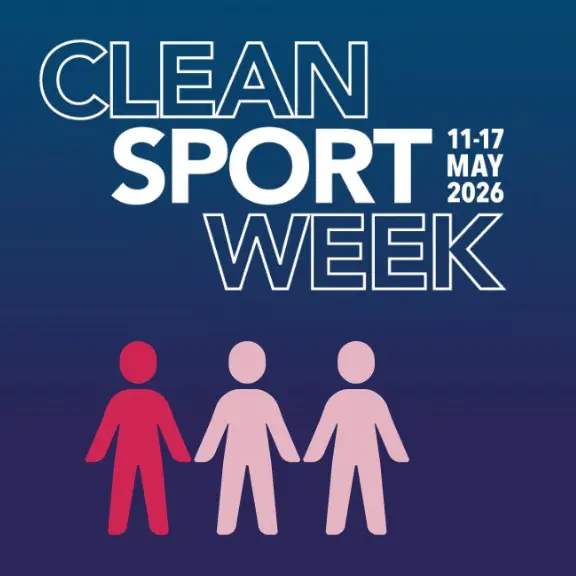
For Clean Sport Week, UK Anti-Doping, the national organisation responsible for protecting clean sport, chose to address that environment directly. Its annual campaign, which champions fair play and drug-free sport, concentrated on the growing online misinformation around SARMs (Selective Androgen Receptor Modulators), a category of IPEDs regularly presented to young people as a safer alternative to anabolic steroids. This is not the case. SARMs can have life threatening side effects and they are not approved for human consumption. Despite this, they are widely advertised and sold online, often alongside misleading claims about their safety.
The campaign's theme, Built Not Bought. 100% Me, was designed to highlight the dangerous misinformation being promoted about these substances. It argued that sporting achievement, fitness and confidence are built over time, not purchased through substances that are being made to look normal and low-risk on social platforms.
A problem shaped by social
The 2026 campaign began with research into how young people are encountering this information. More than 1,000 people aged 16 to 25 took part in a public survey, which gave UKAD a clearer sense of the scale of the issue, as well as an evidence base for the campaign's media activity.
The findings were striking. According to UKAD's survey, 42% of young people had seen "superhuman" or shortcut-results content on social media at least once a week over the previous month, while one third said they had bought SARMs after seeing the products advertised or promoted online.
On social media, it can be folded into fitness, gym and lifestyle content, drawing on the same visual language and aspirations that make other forms of self-improvement content so engaging. The campaign therefore had to do more than state the risks. It had to make those risks known in the places where misinformation was already gaining attention.
Making the message relatable
Developed by UKAD's communications team in collaboration with colleagues across the organisation, the Athlete Commission, athletes, National Governing Bodies and sporting partners, Clean Sport Week used research, creative content, digital advertising, earned media and partnership activation to carry the message across multiple touchpoints.
Athletes were particularly important to the work. Rather than relying entirely on institutional communications, UKAD placed people with relevant experiences, pressures and audiences at the centre of the campaign storytelling. For a campaign aimed at 16 to 25-year-olds, that decision gave the work a better chance of cutting through an online environment where peer influence and perceived authenticity frequently matter more than formal expertise.
Clean Sport Week is already an established part of UKAD's calendar, bringing athletes, coaches, sporting organisations and communities together around fair play and clean sport. This year's campaign recognised the risks associated with SARMS do not sit within elite competition alone. They are also linked to body image, performance pressure and the expectation, amplified by social media, that physical results should come quickly.
More than an awareness week
The campaign reached 1.1 million people across social media and generated 47,000 impressions from 428 unique authors. Both video views and the number of authors posting about the campaign increased by almost double compared with the previous year's Clean Sport Week content.
Alongside its social activity, UKAD secured 731 media mentions with a reported combined 739.8 million impressions. The campaign was covered by outlets including BBC Radio 4's Today programme, TalkSPORT, The Times, The Guardian and BBC Sport's social channels, extending the conversation well beyond UKAD's own audience.
The results matter, but the longer-term work is arguably more significant. UKAD has commissioned independent research through Swansea University to examine how SARMs are marketed and sold online, including the role influencers may play in spreading misinformation. The findings and recommendations will inform its continuing work to better understand the scale of the issue and what can be done to address the harms associated with SARMs.
Purpose-led social work is often reduced to the language of awareness, but awareness is only useful when it gives people something clearer to recognise, question and act on. Clean Sport Week 2026 did that by taking a problem already embedded in social feeds and treating it with the seriousness it requires, while still finding a message that could travel.
The winner of Purpose-Led or Social Impact Campaign of the Year at the Social Media Marketing Awards will be announced at the awards ceremony on 8 October in London