
Pinterest has launched a campaign built around an idea that most social platforms would never say out loud: the best thing an app can do is give you a reason to close it and go and live your life. The rollout began on 1 May across TV, cinema, out-of-home and digital, and Pinterest is positioning it as its most ambitious paid media campaign to date.
That matters because it cuts against the logic that has shaped most of the social media industry for years. The mechanics are familiar to anyone working in the space: watch time, retention, session length, frequency, all the signals that tell a platform someone stayed a little longer than they meant to.
Pinterest is trying to place itself outside of that story. In Claudine Cheever's words, other platforms are engineered to keep people scrolling through other people's lives, while Pinterest is engineered to get people off the app and into their own. It is a sharp line, but it is also a useful one, because it turns Pinterest from another feed into something closer to a tool for action.
The creative leans heavily on that distinction. The campaign is led by a 60-second anthem film, "How did they do it?", produced in-house by Pinterest's House of Creative using old home movies and family photos submitted by employees, with the aim of showing a pre-social media world that feels more unfiltered and more lived in.
That is why the campaign works. It is not just selling Pinterest as a nicer place to spend time online, it is selling Pinterest as the place where online inspiration becomes something physical and real, whether that is cooking something, making something, changing your home, planning a trip or starting an idea you have been sitting on for months.
For people in social, that makes this more interesting than a standard brand campaign. It speaks directly to a frustration that has been building for years, which is that a lot of content now creates the feeling of momentum without actually leading anywhere. Pinterest is arguing that the value of a platform should not just be measured by how long people stay, but by what they do afterwards.
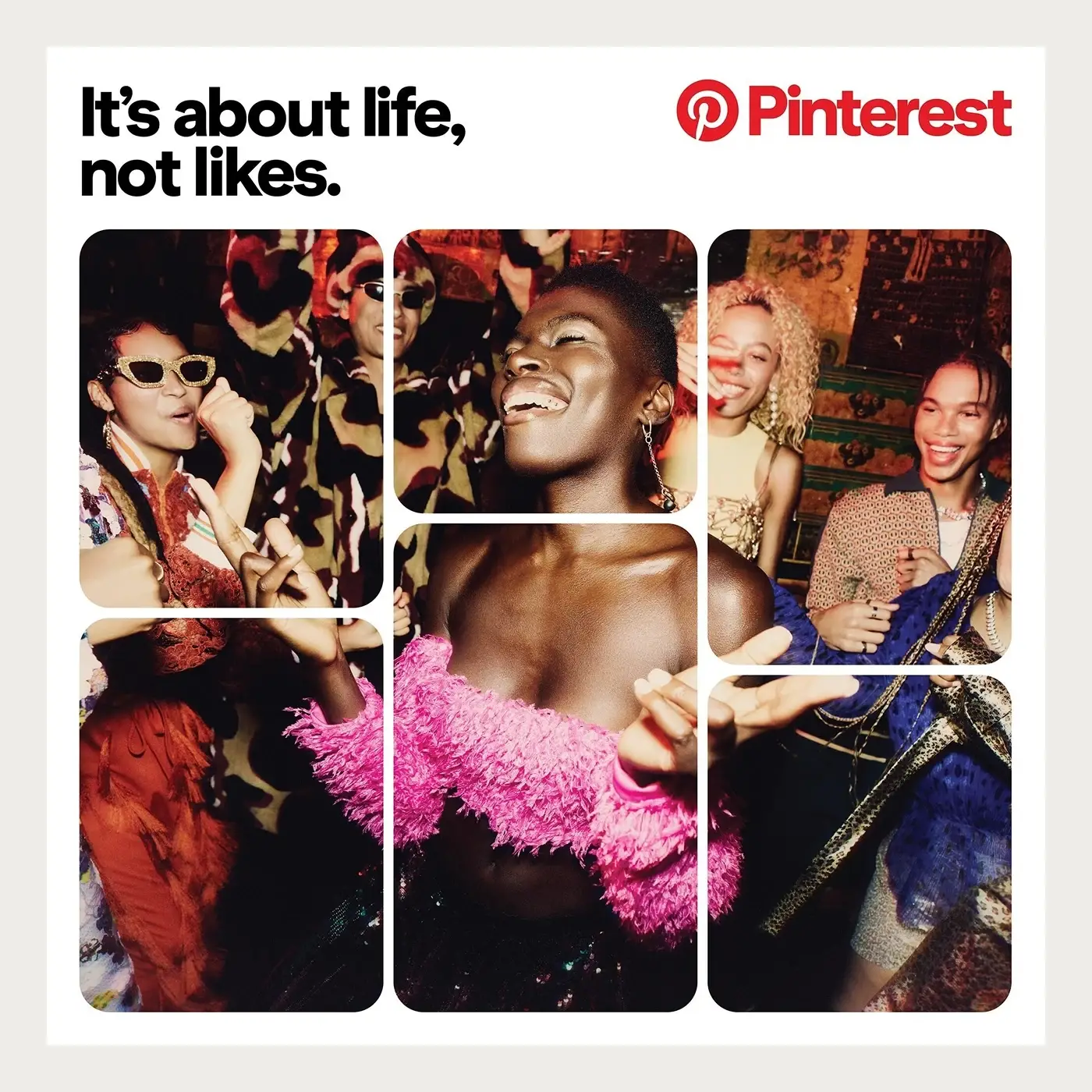
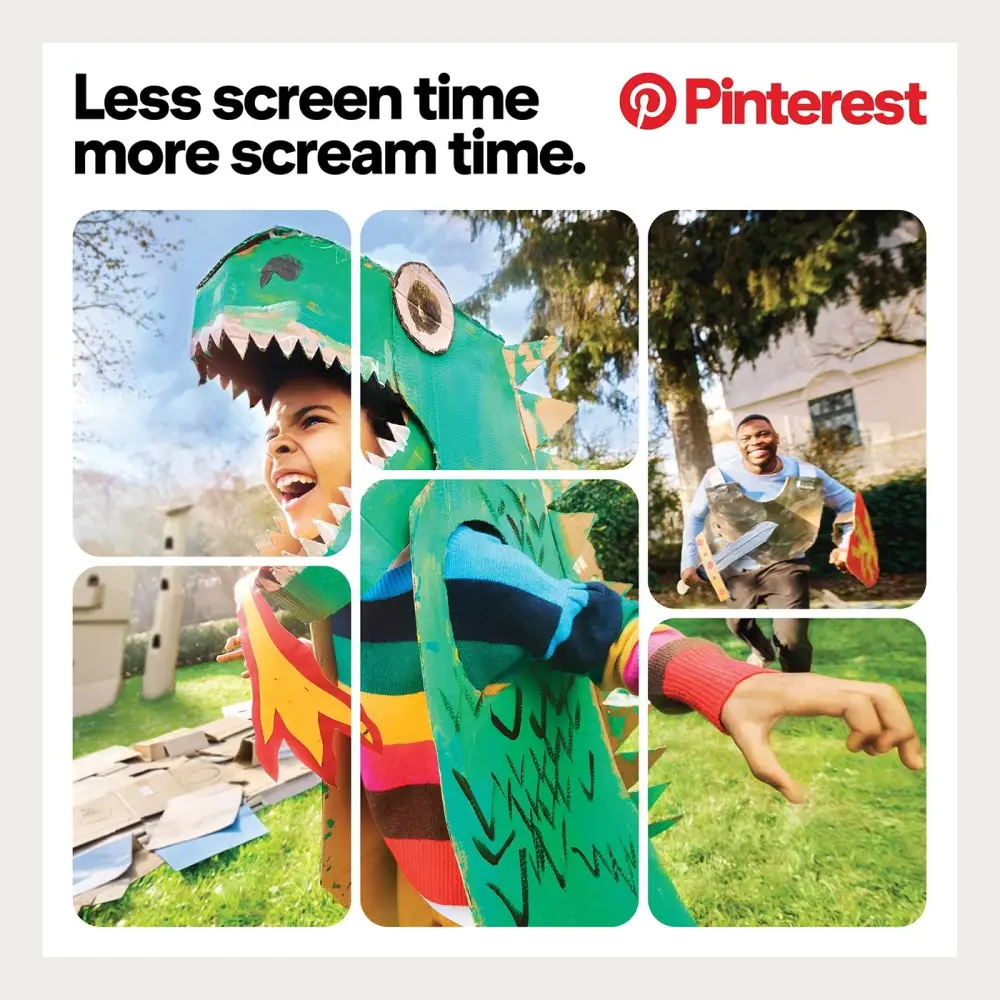
The media plan reinforces that argument well. Alongside TV, digital and social placements, Pinterest is also running in cinemas and using "silence your phones" messaging before major premieres, while the out-of-home creative in the UK and US uses Pinterest's familiar Pin grid to show how saved Pins translate into real-world outcomes.
The lines in the outdoor campaign are direct and deliberately un-subtle: "It's about life, not likes", "Less URL. More IRL." and "A better feed that feeds the soul." That tone works because Pinterest is not trying to be clever here, it is trying to claim a very clear cultural position at a moment when social fatigue is easier to recognise and harder to dismiss.
There is also a bigger strategic point underneath it. Pinterest has spent years trying to distance itself from being seen as a traditional social network and instead present itself as a discovery platform, and this campaign pushes that positioning much further by framing discovery not as endless browsing but as a route into offline action.
That does not mean the claim is without tension. Pinterest is still an advertising business and still benefits from attention, and some commentators have pointed out that this is not a rejection of platform economics so much as a smarter differentiation play against competitors whose products are more obviously built around addictive use patterns.
Still, that tension is part of what makes the campaign worth covering. It is not often that a platform builds a major brand push around the idea that more time spent is not necessarily the best outcome, and whether you read that as conviction, positioning, or both, it says something important about where the category is going.
The bigger question here is that attention on its own no longer feels like a complete story. Pinterest is betting that people, and brands, are more interested in intent now: what someone came for, what they found, and what they did next. In a social landscape crowded with content designed to keep people in motion, Pinterest is making a case for something more useful: a reason to stop scrolling.
Learn more about the campaign: https://newsroom.pinterest.com/en-gb/news/2026-brand-campaign/