
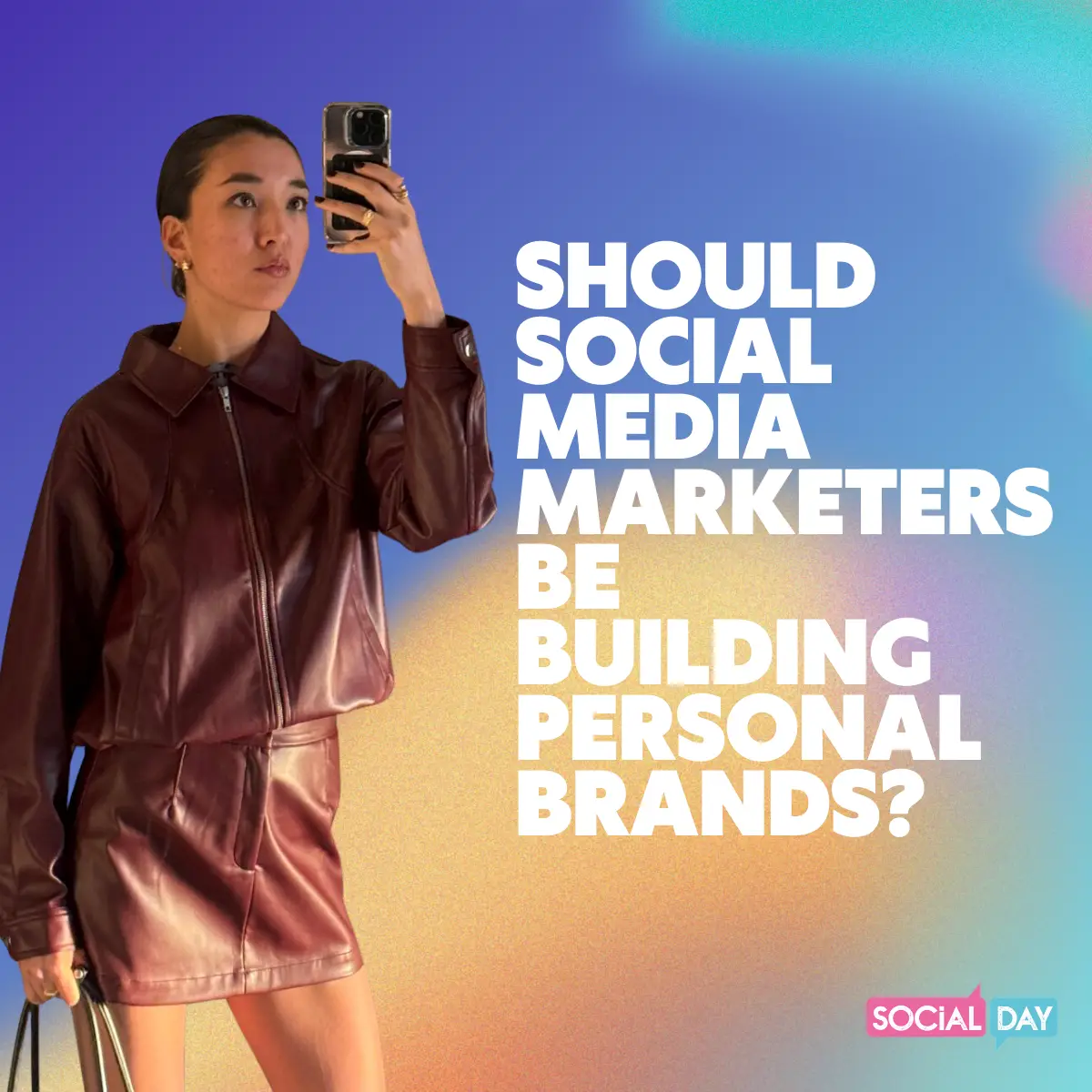
Working in social media marketing at the moment, can feel like there is this unspoken rule that you are supposed to be building your own brand on the side, almost as if running the company accounts all day is not enough, you are also meant to turn yourself into an account and keep that going as well. Some people genuinely enjoy that extra layer, they like posting, they like talking to people, they like having their own thing, and that is great. Some people just want to do their job properly, look after the brands they are paid to look after, close the laptop and not have to think about filming a "day in the life" to prove they are real and committed to marketing. Both camps exist, and both are valid, but the way the industry talks about "personal branding" makes it sound like homework, and if you are not doing it you are somehow less serious about your career.
Why so many social people are doing it
There are reasons this has become so common for social practitioners, and it is not just vanity. If you spend your days building reach, engagement and community for other people, eventually you start to realise you could be doing that for yourself as well, and that your own name does not have to be totally invisible in the process. A personal brand, at its best, is just a slightly fancier way of saying that people can see how you think and what you are about, without having to dig through old job descriptions and vague bullet points.
It works well in social media because you already know how to post, how to read analytics, how to understand what lands and what does not, and in a job market where roles are constantly being reshuffled, it feels safer to have some kind of footprint that belongs to you and not to a company login that can disappear overnight. When you share how you approach campaigns, talk about what you are learning or what you would do differently, it acts as a living portfolio that does not rely on one employer giving you permission to show your work.
The upsides when it actually helps
So there are some real benefits, and they are worth acknowledging properly. It makes it easier for people to understand what you do beyond "I run the socials," because they can see how you break things down, how you think about audiences and platforms, and how you respond to trends, which is much more concrete than a title on a CV. It tends to speed up trust, because by the time someone messages you about a role or a project they often feel like they already know you a bit, they have seen you be consistent over time, and that is calming for them.
It can also open doors that do not sit neatly in a job spec, like speaking at events, teaching, writing, sitting on panels, doing small bits of consulting, or simply being the person people tag when they see social media roles or briefs that fit you. None of that requires you to be an "influencer," it just requires enough visibility that people remember your name and associate it with "this person knows what they are doing."
Where it starts to become a problem
There is a flip side that people in the "build your personal brand" discourse tend to skip over, and that is where this stops being useful and starts to feel like another performance that you have to keep up. When your name and face are so tightly tied to your work, it can feel like you are never really off, because anything you do or say could be content, could be part of the "brand," and that is a tiring way to live, especially in a role that is already always on.
There is also a point where it becomes more about attention than about craft. It is easy to slip into chasing numbers on your own content, simplifying your opinions so they fit into neat viral formats, or picking fights you do not really care about just to keep growth going, and that can dilute the seriousness of your actual work. At the same time, if you are employed, a very visible personal brand can create a subtle tension with your employer, because people start to ask whether you are building long term value for the company or building your exit strategy, and whether your focus is split. On top of that, when something goes wrong and you post something that does not land, the reputation hit is very personal, it is not just a brand mistake that can be fixed in a comms statement.
Is it all about becoming a creator?
There is also this narrative sitting underneath all of it, which is that if you are good at social the natural progression is to become some kind of creator, get brand deals, sell courses, launch your own thing, and turn yourself into the product. For some people that is exciting and they lean into it, and that is fine. For others, that is the opposite of what they want, because they actually enjoy working in teams, building brands that are not them, or simply having a private life that is not chopped up into content.
You can be excellent at social media without turning your personal life into a feed or your personality into a product. A low key LinkedIn presence where you share the odd thought, an updated portfolio, maybe a talk or two a year can do a lot of the heavy lifting without you needing to maintain a content calendar for your own name.
So what is the answer?
It feels more honest to say that if you work in social, having absolutely no professional footprint online does put you at a disadvantage now, because people expect to be able to find something about you and it helps them feel confident hiring or working with you. That does not mean you have to run yourself like a brand, it just means some level of visible, intentional presence makes your life easier when you want new opportunities.
From there you get to choose your level. For some people it will be the bare minimum: a clear bio, a pinned post that explains what you do, the occasional bit of commentary on the platforms you know well. For others it will be more of a proper personal brand with regular content, clearer positioning and a plan. And for some people it will still be a conscious opt out, backed up with strong internal relationships, references and work that speaks for itself behind the scenes.
The point is not to bully every social media marketer into acting like an influencer. The point is to recognise that you can set the terms, and that a "personal brand" can be as simple and quiet or as loud and polished as you want it to be, as long as it actually serves your work and your life rather than draining you for the sake of being seen.