
Snapchat's Now Playing turns Snap Map into a friend-driven music discovery engine
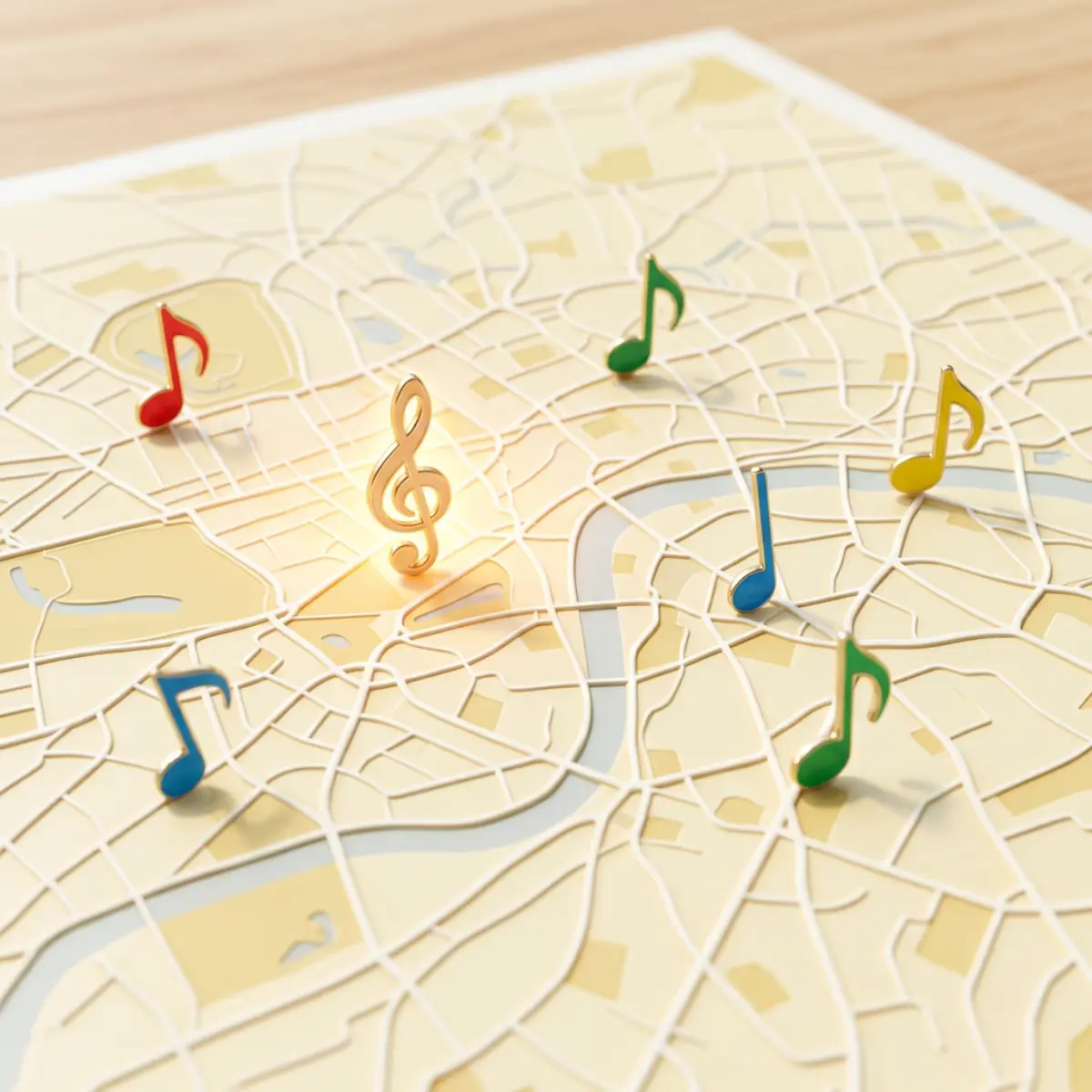
Snapchat launched Now Playing on 27 July, a feature that lets users share what they're listening to in real time via Snap Map. With more than 450 million people using Snap Map each month, the integration turns location-sharing infrastructure into a live music distribution channel where discovery happens through friends' current listening, not algorithmic recommendations.
Users link their Spotify accounts, choose who can see their listening activity, and see what their friends are playing in real time. The feature won't show last-played songs or listening history, and sharing pauses automatically after 24 hours of inactivity, resuming when the app is reopened.
The intimacy bet
Where TikTok and Instagram built music discovery on viral feeds and algorithmic reach, Snapchat is betting on something smaller and stickier: what your actual friends are hearing right now.
Snapchat is taking a behaviour that usually lives in the background (listening to music) and turning it into a live social cue. The activity is not being pushed into a feed, a Story, or a dedicated music tab. It lives on the map, alongside location. The signal is passive, ambient, and personal.
Snap Map launched in 2017 as a way for users to see friends' locations and browse public Snaps, but over time has expanded to include local hotspots, activities, and now music. Each addition layers another dimension of what friends are doing, not just where they are. Snap Map is no longer just a place to see where friends are but is becoming a surface for what they are doing, feeling, and listening to right now.
The logic is sound. If you trust someone's location enough to share it, you probably trust their music taste. Discovery through friends has always worked, from mix tapes to shared playlists. Snapchat is making it continuous and automatic.
For Snapchat, the bet is that close-friend context makes this feel natural rather than performative. But real-time listening activity can be intimate, and some users will love the signal while others may not want every track to become part of their social presence.
What it means for music marketers
This isn't a viral discovery engine. It's a friend-to-friend recommendation layer, and that changes how music spreads on the platform.
On TikTok, a track blows up because the algorithm surfaces it to millions. On Snapchat, a song spreads because someone you actually know is listening to it right now. That's slower, but stickier. Embedding Spotify inside a social network where friends surface songs to each other is an acknowledgment that discovery, not catalog depth, is where streaming services will win or lose listeners.
For artists and labels, the strategic implication is clear: Snap Map Now Playing rewards genuine fan listening, not paid virality. If your core audience is on Snapchat and actively streams your music on Spotify, their listening becomes organic, peer-to-peer marketing. There's no way to game it with influencer campaigns or paid placement. The feature only works if real people are genuinely playing your track.
The feature has been integrated with Spotlight videos, and users can save songs discovered in a Spotlight video directly to Spotify or visit the track's page on the platform. That creates two discovery paths: passive (seeing what friends listen to) and active (finding music through Snapchat's short-form video feed). Both feed directly into Spotify, closing the loop between discovery and streaming.
Music is one of the most personal ways people express themselves, and it becomes even more meaningful when it brings friends closer.
Manny Adler, Snapchat Head of MusicHow it stacks up against Instagram and TikTok
Instagram and TikTok have spent years building music into their platforms, but neither has cracked real-time, friend-driven listening in quite this way.
Instagram allows users to share what they're listening to through Notes, which are short status updates that appear at the top of users' DM inboxes. Instagram's Spotify integration, which rolled out in June 2025, automatically displays what users are listening to on Spotify in their Notes, updating based on listening activity. The mechanic is similar, but the placement is different. Instagram Notes sit at the top of DMs; Snap Map Now Playing lives on a map where location and listening merge.
TikTok now lets users share songs from streaming services to the platform and save songs they come across, and it leads in viral music creation, followed by Instagram Reels and YouTube Shorts. But TikTok's music discovery is algorithmic and feed-based. You discover songs because the For You Page serves them to you, not because a friend is listening right now.
TikTok dominates viral discovery among Gen Z with 2.5% average engagement rates, while Instagram Reels provides broader demographics and stronger monetisation. Snapchat's Now Playing doesn't compete on those metrics. It competes on intimacy and real-time social context.
The real edge is passive discoverability. On Instagram, you have to actively check Notes. On TikTok, you have to scroll the feed. On Snapchat, you open the map (which 450 million people already do monthly) and see what friends are listening to without any additional step.
The Spotify angle
Spotify itself has leaned into social music sharing, launching a feature that allows users to share what they're listening to with their friends in real time. That feature lives inside Spotify's app. Snapchat's integration brings it into a social context where location, presence, and listening converge.
For Spotify, the upside is clear: 450 million potential new touchpoints for music discovery, all tied directly to saves and streams. The Snapchat integration includes the ability to save songs discovered on that app to your Spotify library, as well as sharing music out from Spotify to the Snap Map.
Snap's announcement suggests the Now Playing feature will eventually expand beyond one music streaming service, and it is rolling out in regions where both Spotify and Snapchat are available, with Canada coming soon. If Apple Music, YouTube Music, or Tidal follow, Snap Map becomes platform-agnostic infrastructure for real-time music sharing, not just a Spotify feature.
What to watch
Three things will determine whether Now Playing becomes a must-use feature or just another social music experiment:
Adoption rate. Snap Map has 450 million monthly users, but how many will link their Spotify accounts and leave real-time sharing on? The feature requires active opt-in and ongoing consent. If adoption stays niche, it won't shift discovery behaviour at scale.
Privacy friction. The feature will only work if it feels easy to control and casual enough to ignore. Snapchat has built granular controls (users can pause sharing for three hours, 24 hours, or indefinitely, and choose exactly who sees their activity), but real-time listening data is intimate. If users feel exposed or over-surveilled, they'll turn it off.
Whether artists and labels can measure it. Right now, there's no public data on how much discovery traffic Now Playing generates, or whether it converts to sustained streaming. If Spotify or Snap release attribution data showing that Map-driven discovery leads to playlist adds, repeat listens, or follower growth, that changes the value equation for music marketers. Without it, the feature remains a nice-to-have, not a priority.
The broader shift
Snapchat's move is part of a wider pattern: social platforms embedding real-time music sharing as a core behaviour, not a content format.
Instagram added Spotify to Notes. TikTok pushed deeper into streaming integrations. Spotify built its own social listening features. Now Snapchat has made listening visible on the map. All of this points to the same conclusion: music discovery is moving out of algorithmic feeds and into ambient, persistent social signals.
For social media marketers, the implication is straightforward. Music is no longer just content to soundtrack a Reel or a TikTok. It's becoming a continuous layer of social identity, something people display passively as part of their presence, not something they perform.
That changes how you think about music in campaigns. It's not just about getting a song into a viral video. It's about whether your audience is actually listening to it, in their own time, in a way their friends can see. The question shifts from "Can we make this go viral?" to "Will people genuinely stream this?"
Snapchat has made the map the answer to that question. Whether 450 million people choose to broadcast their listening is the part we don't know yet.