

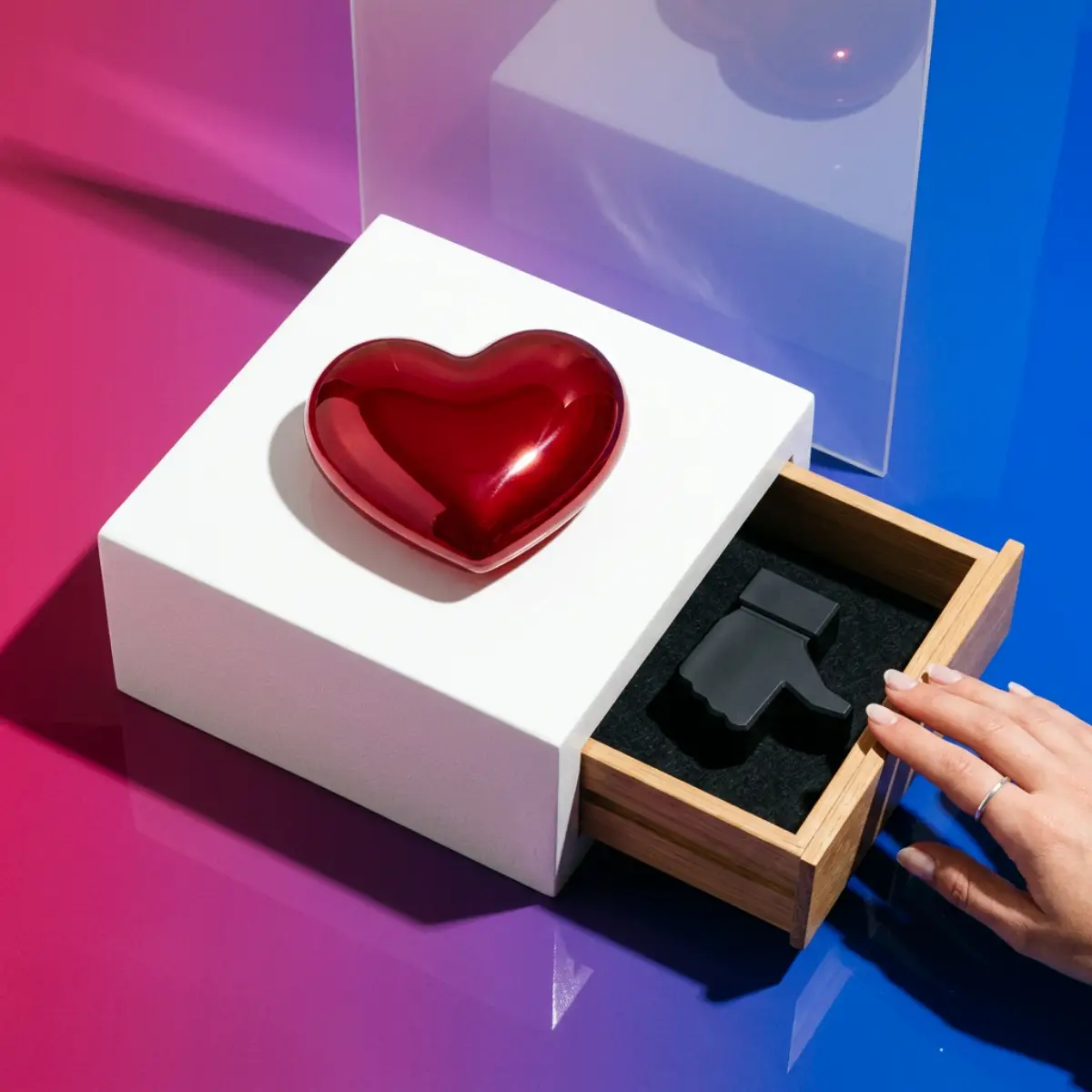
YouTube Shorts ditches thumbs down for hearts: what the feedback shift means for creators
YouTube replaced its Shorts thumbs-up and thumbs-down buttons with a heart icon and removed the dislike button entirely in early July 2026, marking the platform's sharpest pivot yet toward recommendation clarity over binary sentiment.
The heart replaces the thumbs-up to provide "a more meaningful way to express when a video truly connects with you," while the dislike button has been retired in favour of "Not Interested" and "Don't recommend this channel" options, which YouTube says offer "more precise controls" to tune feeds. The changes were rolling out from 25 June 2026, following a limited test in early June.
The shift affects Shorts only. Long-form YouTube videos retain the thumbs-up and thumbs-down system, preserving the "not interested" and "don't recommend this channel" options alongside the traditional like/dislike pair.
Why YouTube killed the dislike button (and what replaces it)
YouTube explained that a dislike "could mean anything from 'poor audio quality' to simply 'not my cup of tea,'" making it difficult to understand genuine viewer preferences. That ambiguity muddied the signal for both the recommendation algorithm and creators trying to decode why something failed.
The platform cited "confusion for viewers as to which does what and when" and "ambiguity for our recommendation systems over when which is being used for what" as the core problem. Three overlapping negative buttons (dislike, "not interested", "don't recommend this channel") created friction where YouTube needed clarity.
The replacement is more surgical. Viewers who dislike a Short can now tap the three-dot menu and choose from "Not Interested," "Don't recommend this channel," or "Report". When selecting "Not Interested," viewers can also specify why a particular Short was not relevant, allowing the platform to refine future recommendations.
The algorithm gets better data; creators lose a blunt metric. Historical dislike data for Shorts remains available in YouTube Studio, but the metric stopped updating by the end of June 2026.
What creators lose (and what they should track instead)
Dislike counts were never public for Shorts, but they were visible to creators in YouTube Studio. That private feedback loop has now closed.
Creators who relied on dislike counts to gauge performance will need to find other ways to measure how their Shorts are landing, with indicators such as watch time, rewatches, comments, and shares becoming more valuable.
The shift doesn't change what makes a Short perform. What used to be a "view" is now split into total views and engaged views, with engaged views requiring meaningful watch time and remaining the primary metric for monetisation and measuring how audiences respond.
Engaged views are what count toward the YouTube Partner Program threshold.
YouTube Studio guidance, June 2026Going forward, creators will need to rely more heavily on metrics such as watch time, audience retention, comments, shares and viewer satisfaction instead of dislikes when evaluating content performance.
That's a harder read than a simple dislike ratio, but it's also more honest. A Short with strong retention and zero dislikes tells you less than one with 70% completion and active "not interested" feedback in a specific demographic.
Heart icon brings Shorts in line with TikTok and Reels
By swapping its thumbs-up like for a heart icon, YouTube Shorts mirrors the familiar engagement style seen on TikTok and Instagram Reels. The visual alignment is deliberate.
YouTube Shorts, TikTok, and Instagram Reels are now offering the same content, and user behaviour is quite consistent across platforms, making the interface change less about branding and more about reducing cognitive friction for audiences who scroll across all three formats daily.
The heart isn't just cosmetic. YouTube described it as a way for viewers to register that "the shorts you enjoy feel a little less" transactional and "a little more" expressive. Whether viewers feel that distinction is secondary; what matters is whether the signal helps YouTube's algorithm surface better matches.
Clear Screen and 2x speed round out the update
YouTube bundled the feedback changes with two viewer-facing features: Clear Screen mode and 2x playback.
Clear Screen mode temporarily hides all icons and text from the playback view, stripping away the clutter and giving an immersive, distraction-free view of the content. The feature closely resembles TikTok's own Clear Mode, accessible via the three-dot menu.
Speed settings have been one of the most requested features from the Shorts community, with double playback now available to absorb information more quickly or find favourite parts faster. Viewers press and hold the edge of the screen to activate 2x speed; swiping down while holding locks the faster pace for the entire video.
The additions are table stakes. TikTok and Reels already offered similar controls; YouTube was simply closing feature parity gaps that made Shorts feel clunkier by comparison.
What the algorithm actually learns from the new feedback
The value isn't in the heart icon. It's in what happens when someone taps "Don't recommend this channel" versus swiping away versus completing and replaying.
Feedback suppression signals like "Not interested" and "Don't recommend channel" now carry significant negative weight, with YouTube stating that adding direct feedback signals into ranking "leads to people coming back to YouTube more in the long run".
That's the trade. YouTube loses the simplicity of a dislike count but gains structured signals tied to specific recommendation actions. The algorithm can now distinguish between "not interested in this topic" and "never show me this creator again," which a thumbs-down never clarified.
For creators, the implication is blunt: content that generates passive scroll-bys might inflate view counts, but engagement ratios like likes per view and comments per view have compressed because the denominator now includes passive scroll-bys that were never going to like or comment. Reading that compression as a quality drop is a mistake. Absolute engagement hasn't fallen; you're just seeing a fuller picture of reach versus impact.
Recommendation quality over sentiment theatre
The dislike button on Shorts was always theatre. It was never public, rarely decisive, and ambiguous enough that YouTube couldn't confidently act on it. The heart-and-menu model trades that theatre for structured input the algorithm can operationalise.
Whether it works depends on whether viewers use "Not Interested" and "Don't recommend this channel" with the same ease they used to tap thumbs-down. Early signs suggest they will. The options were already there; YouTube just made them the only path for negative feedback, which forces behaviour change through design constraint rather than education.
For social media professionals, the shift clarifies what matters: watch time, completion rate, and whether viewers take active steps to see more or block you out. Hearts are just the button. The feedback layer underneath is what changed.