
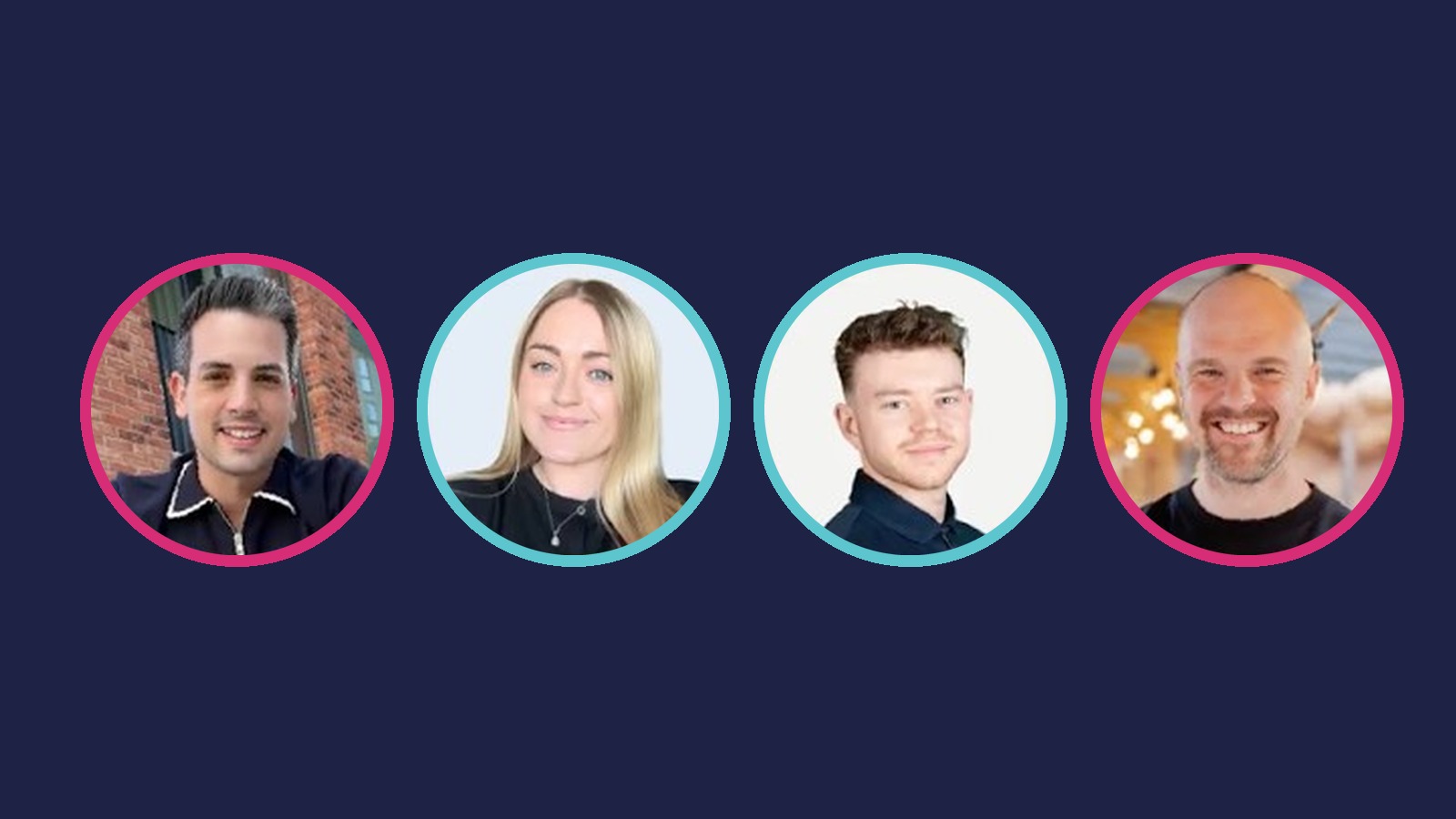
Paid social has never been a single job. It sits between performance marketing and creative, borrowing the measurement habits of paid search and the instincts of organic social. A panel at SocialDay, chaired by Jon Quinton of Overdrive Digital, set out to show what that looks like inside brands in 2026, with Harry Cunliffe of Skin + Me, Pablo Heras Palacios of Domino's Pizza and Ellie McGuigan of Cancer Research UK.
The picture they painted was not one of shiny new tactics. It was about workload, internal politics, evidence and how much creative is enough. Those are the problems most in-house teams are actually solving.
The job is busier and more competitive
Harry described brand-side paid social as "incredibly hectic at the moment", with more output required and constant pressure to work out where time is best spent. Pablo added a competitive angle: when he started, paid social felt like a blind spot for many brands, and now far more of them are investing, which means teams "need to be more strategic".
Ellie's typical day showed how wide the role has become. It can include in-house team check-ins, agency calls, conversations with platforms, media planning and wider projects such as a paid social playbook she built to explain the fundamentals across Cancer Research UK.
The useful takeaway is that paid social managers are increasingly translators. They connect creative, data, media buying, organic, influencer and analytics teams. Silos hurt, and all three panellists described working closely with neighbouring teams to borrow insight, from organic trends to customer conversations.
Getting brand teams on side is an education job
Jon raised a tension many practitioners will recognise. Paid social now depends on a steady pipeline of varied creative, but brand approvals and guidelines can slow that pipeline down.
Ellie's answer was structure and shared learning. After Meta's Andromeda changes put more weight on creative diversification, she spent time explaining the media buying side to creative colleagues and created a scoring matrix to judge how diverse their ads really are. The point, she said, was to show "Why do we need really native content versus heavily branded content?" Bringing test results back to those teams then becomes part of the education.
Harry framed the same problem as two teams "speaking different languages". Brand storytelling and direct response ads do different jobs. At Skin + Me, testing campaigns sometimes run creative close to, or slightly over, the brand line, with only a small amount spent before the business decides whether a winner is worth the risk. He was candid that one playful static ad scaled well and was later taken down by the ASA, a reminder that a test budget limits exposure but does not remove compliance responsibility.
Pablo described a clearer split at Domino's. Brand creative leans into broader storytelling, often built with TV in mind, while paid social adapts that material into shorter, product-led ads with a stronger call to action for each platform.
Cancer Research UK is also overlaying brand lift studies on creative tests, using questions such as ad recall to judge whether an ad balances in-platform performance with a positive brand effect. That gives brand discussions data rather than opinion.
Real people can be cheaper creative
Harry appeared in a Skin + Me ad himself, pitching a bundle in a single office take. It was a test of whether employees could give the business "a bit of life". Influencer ads work, he said, but they cost far more than filming something in the office. The idea was borrowed from another DTC brand's top performer, and adapted from a message that had already won.
That is a practical model for smaller teams: take a proven message, change the messenger, and test whether real faces from the business can do some of the work usually bought from creators.
What brands want from agencies
Agency advice from the panel was refreshingly specific. Harry said priorities can shift "twice in a week", so agencies need regular updates on the current north star, and brands should not expect one kickoff meeting and a brand bible to carry an agency for the rest of the relationship.
Pablo asked agencies to ask as many questions as possible before launching activity or presenting a plan. Ellie said her best agency relationships felt like "an extension to our team", helped by meeting in person and by patience with in-house lead times agencies cannot always see. Harry added that his UGC agency adds most value when it is given room within guidelines, rather than being dictated to.
Building the business case for budget
Ellie gave the clearest framework for winning investment. Start with the problem or constraint, such as plateauing performance or the need to reach a new audience. Then gather evidence from agencies, platforms and comparable case studies, identify the risks, and explain how they will be mitigated. Cancer Research UK also has an innovation pot for tests where learning matters even if results go sideways.
Pablo's focus is incrementality: showing orders that "wouldn't happen" without the activity, supported by brand lift work. Harry said testing is embedded at Skin + Me, with around 10% of budget usually available when there is a rationale. His two conditions are worth stealing: test big enough to learn properly, and quickly enough to kill what does not work.
Proving the upper funnel and fixing attribution
Audience questions turned to measurement. Asked how to justify upper funnel spend, Pablo pointed to regular marketing mix modelling. Ellie described testing campaigns with and without the awareness layer, then comparing incremental conversions, while noting it is still a journey. Harry mentioned platform-funded tests and hold-out studies offered through Meta.
On the gap between Meta's reported results and later modelling, nobody offered a magic formula. Skin + Me uses channel-specific promo codes plus back-end attribution that gives more credit to first touch. Domino's balances Meta, Google Analytics and mix modelling. Harry's most practical point was that even when sources disagree, they often follow similar trends, so teams can calibrate platform benchmarks against what the business sees.
How much creative is enough?
The final question was whether Andromeda means more ads than ever. Ellie said her team usually has six to ten ads live per ad set and is prioritising quality and real differentiation, while exploring an AI creative tool carefully because template-led variations can still look alike.
Harry described swinging between mass content and polished quality, with better performance in the middle. His approach is to test winning messages against different personas and emotional motivators, then repackage them across formats. Pablo tied volume to audience stage: prospecting needs a wider range of creative, while remarketing can be more focused on the message for that stage.
The Sauce verdict
The strongest lesson from this panel is that paid social performance is increasingly decided before an ad goes live. It depends on how well teams explain creative needs, protect test budgets, define evidence and keep agencies in context. Platform features matter, but the in-house operating model matters just as much.
For teams under pressure to make more creative, the answer is not simply more volume. It is a clearer system for diversity, learning and measurement, so every new ad has a reason to exist.
Members can watch the full panel replay on The Sauce. For more practical thinking, explore our paid social coverage.